🧥
Fur and Skin
The fur looks white or cream-coloured, but individual hairs are almost transparent. The skin beneath the fur is black and absorbs solar heat well.
Learn more about the Arctic’s largest land predators — their anatomy, habits, diet, and remarkable abilities.
The polar bear (Ursus maritimus) is a large mammal in the bear family. Its body is perfectly adapted to freezing temperatures, snow, and swimming in icy water.
The fur looks white or cream-coloured, but individual hairs are almost transparent. The skin beneath the fur is black and absorbs solar heat well.
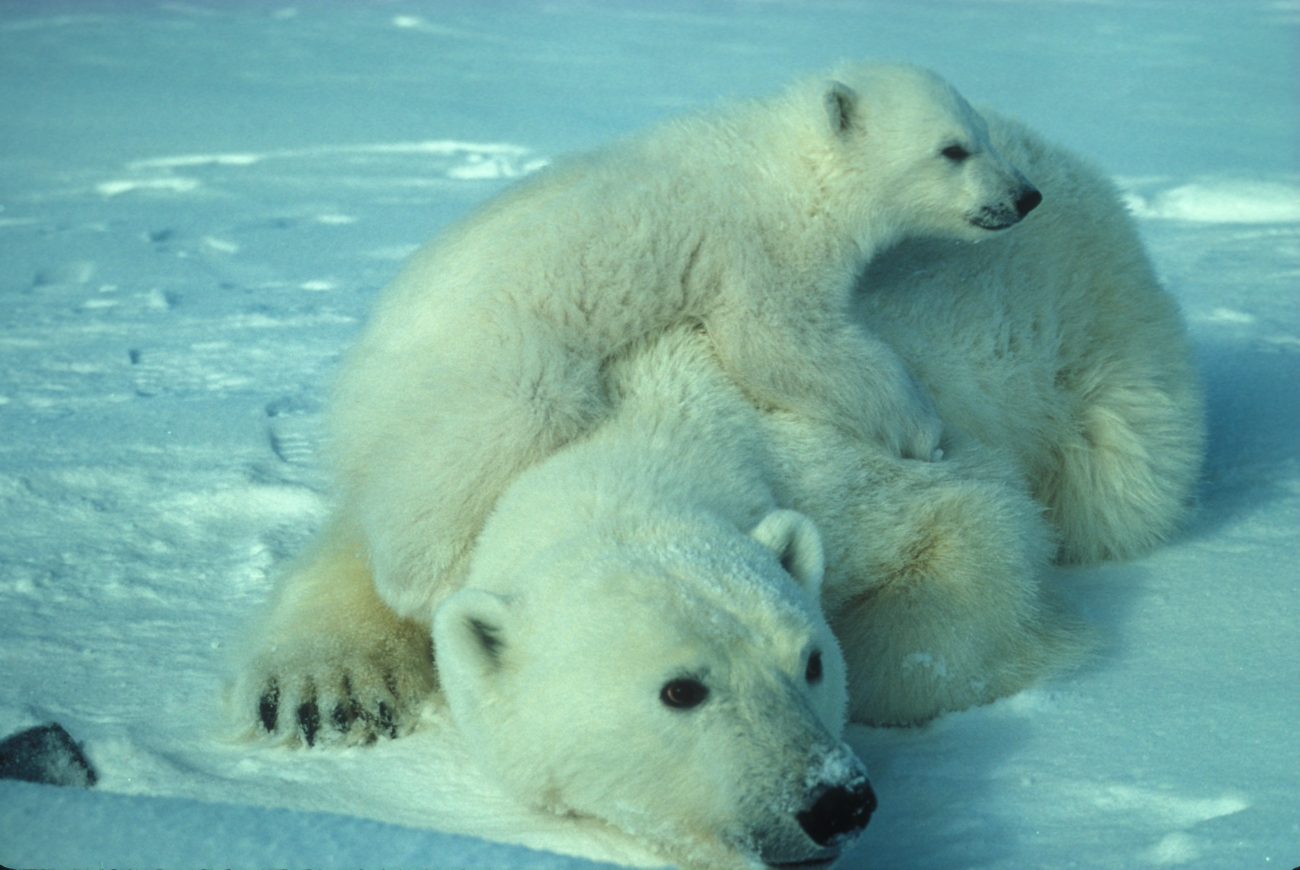
Large paws distribute the bear’s weight on snow. Their pads are covered with fur and textured surfaces that improve grip on ice.
Thick fur and a deep layer of fat beneath the skin retain heat even at very low temperatures.
Polar bears have a highly developed sense of smell and good hearing. They can detect the scent of prey from a great distance.
Polar bears are carnivores. Their main prey is ringed seals and other seals. They often wait for seals near breathing holes in the ice or along the ice edge.
Sea ice provides a platform for polar bears to hunt. When the ice retreats, bears must go longer without their usual prey or travel greater distances to find food.
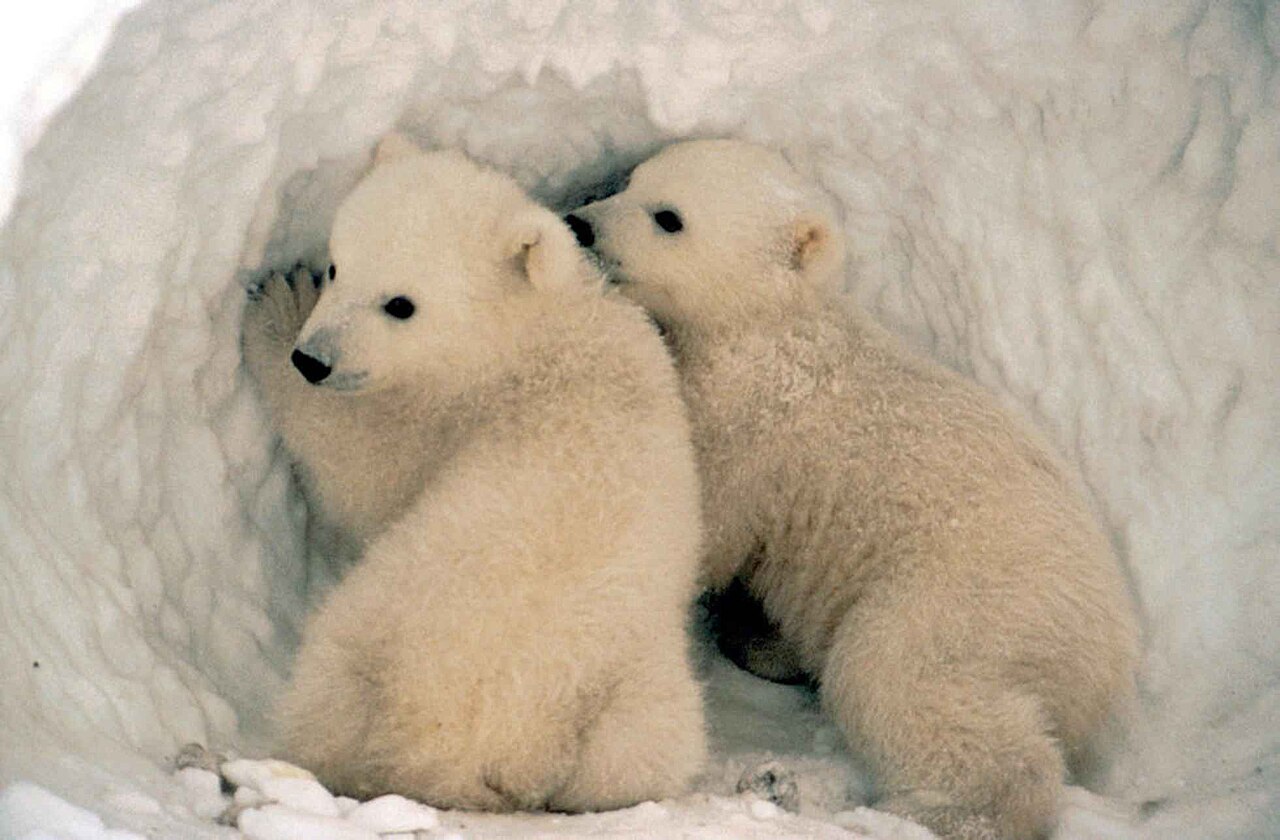
Before giving birth, the female makes a snow den where the cubs are born and spend the first months of their lives.
Cubs are born tiny and helpless. Their mother nurses, warms, and protects them, then teaches them essential skills.
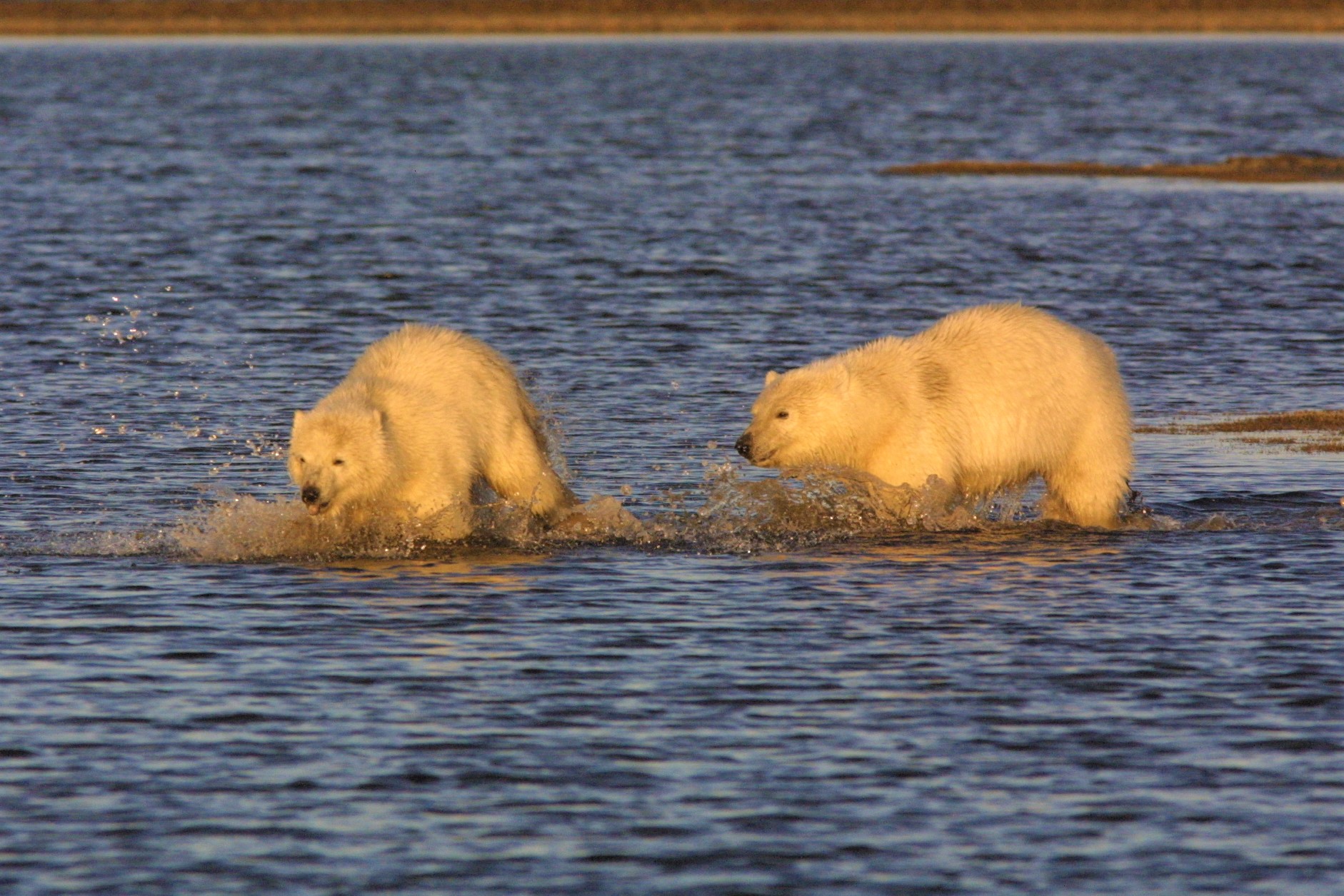
Polar bears are confident swimmers, using their front paws like paddles.
Their light-coloured fur helps them blend into snowy and icy landscapes.
They can walk and swim considerable distances in search of food.
Polar bears live around the Arctic Ocean, including in Russia, Canada, the United States, Greenland, and Norway.
Protecting the climate and keeping the Arctic clean are essential for these animals’ future. We can respect nature, reduce waste, save energy, and support scientific and conservation projects.
Back to HomePolar bears are adapted to the harsh Arctic climate. Here you can see cubs and an adult bear in their natural habitat.